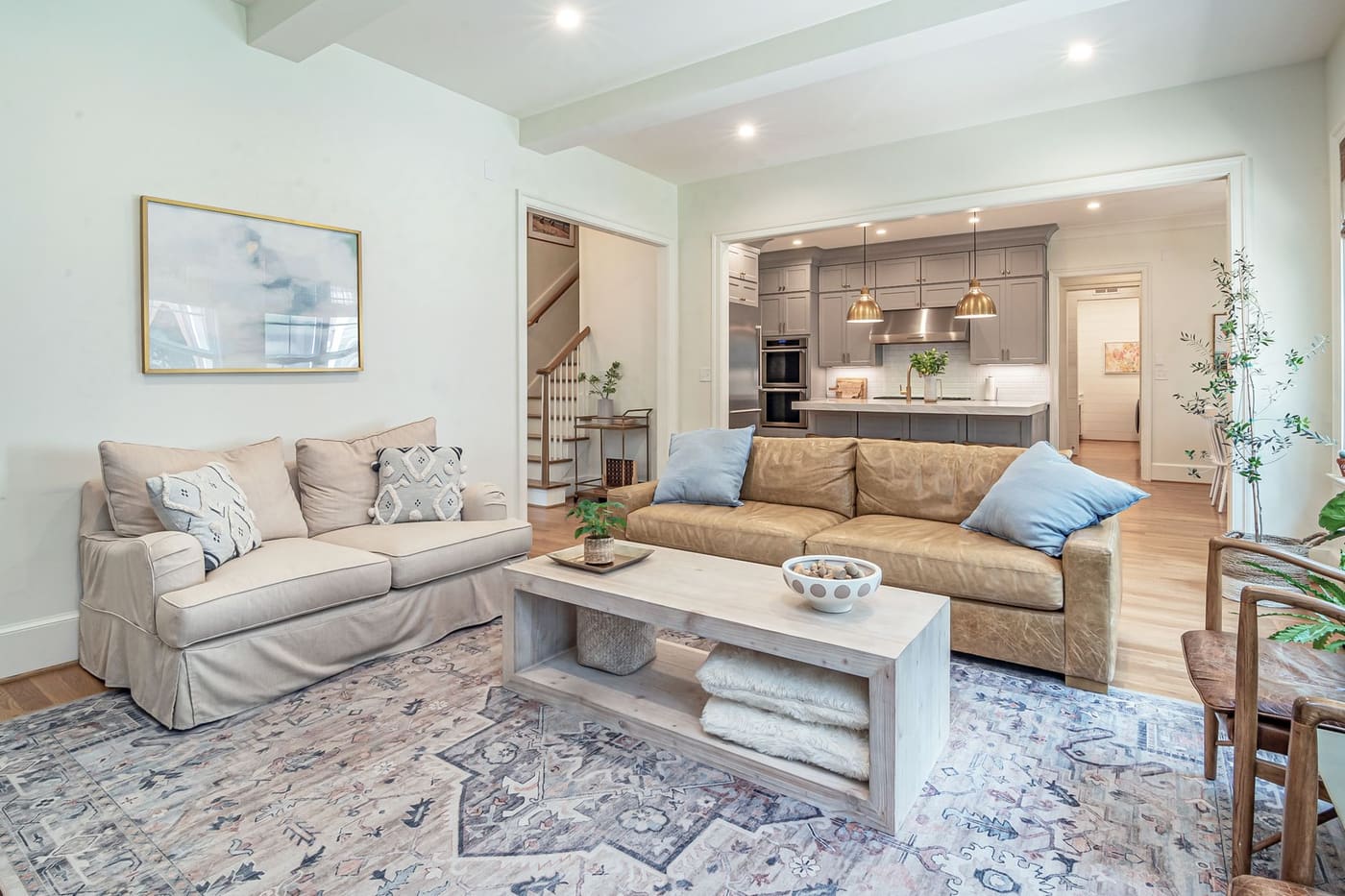
The rug size that looks most put together is one large enough that the furniture sits on it, or at least has its front legs on it. For most living rooms that means 8 by 10 feet, or 9 by 12 feet in larger rooms. In dining rooms the rug should extend about 24 inches past the table on all sides, and in bedrooms it should reach at least 18 to 24 inches beyond the bed’s sides.
The most common rug mistake is buying one that is too small. A small rug floating in the middle of a room makes furniture look scattered and the room look smaller. A larger rug ties the group together, and the extra cost is usually worth it. This guide gives sizes by room, simple rules, and a way to test before you buy.
Why small rugs look off
A rug works like a frame for a furniture group. When the rug is smaller than the arrangement, it looks like a doormat dropped in the middle, with furniture on bare floor around it. The eye reads the pieces as unconnected, even when the furniture is well chosen.
A larger rug has a few effects:
- It groups the furniture into one zone, which makes the layout look planned.
- It makes the room look bigger, since the rug extends the visual footprint.
- It adds warmth, noise absorption, and comfort underfoot.
- It sets the border for the room, leaving a strip of floor visible, typically 12 to 24 inches, between rug edges and walls in a medium room.
The related guide on laying out a room explains how to arrange the furniture first, since rug size depends on layout.
Living room rug sizes
There are three standard approaches, from most to least polished.
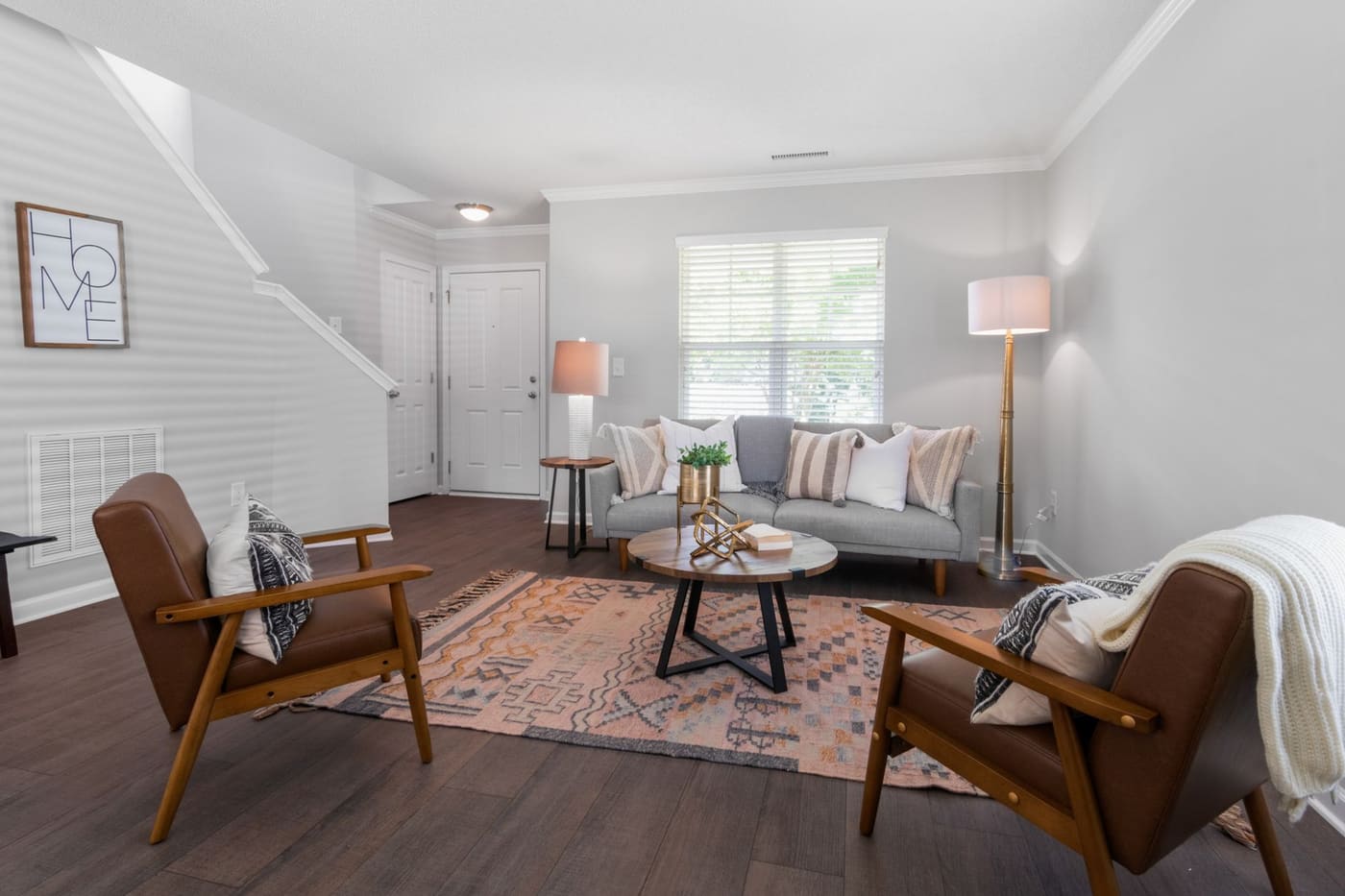
- All legs on: Every piece of seating sits fully on the rug. This is the most formal look and needs a large rug, often 9 by 12 feet or bigger.
- Front legs on: The front legs of sofas and chairs sit on the rug and the back legs rest on the floor. It is the most common choice and works well with an 8 by 10 foot rug in many rooms.
- Floating: Only the coffee table sits on the rug, with furniture off it. This works only when the rug is large enough to look intentional, and is the riskiest in small rooms.
A typical guide:
| Room or setup | Common rug size |
|---|---|
| Small living room, sofa plus one chair | 5 by 8 feet, front legs on |
| Standard living room | 8 by 10 feet |
| Large living room or open plan | 9 by 12 feet or larger |
| Under a sectional | 9 by 12 feet, sectional front legs on |
| Entry | 3 by 5 feet |
| Hallway runner | 2.5 by 8 to 10 feet, leaving 4 to 6 inches of floor at each side |
The rug should be wider than the sofa, with about 6 to 12 inches beyond each side, and leave a border of at least 12 inches from the wall in a small room, or up to 18 to 24 inches in a larger one. If the rug would nearly touch the walls, go a size down. In a room smaller than about 10 by 12 feet, a 5 by 8 rug can be the right choice. For tips on shrinking the visual load in small rooms, see the guide to making a small room feel bigger.
Dining room rug sizes
In a dining room the key is that chairs stay on the rug when pulled back. If the back legs fall off the edge, chairs catch and tip. A rug should extend at least 24 inches, and 30 inches is more comfortable, beyond the table edge on every side.
Common matches:
- Round table 48 inches wide: 8-foot round rug, or an 8 by 8 square
- Rectangular table 72 by 36 inches: 8 by 10 feet is the practical minimum, 9 by 12 is easier
- Rectangular table 96 by 40 inches or larger: 9 by 12 feet or 10 by 14 feet
- Small table for two to four: 6 by 9 feet
Choose a low pile or flatweave for dining rooms, since thick pile makes chairs hard to slide and traps crumbs. Washable or easy-to-clean fibers are practical under a table.
Bedroom rug sizes
Bed rugs should sit under the lower two-thirds of the bed and extend beyond the sides so your feet land on something soft when you get up.
| Bed size | Common rug size |
|---|---|
| Twin | 5 by 8 feet |
| Full or queen | 8 by 10 feet |
| King | 9 by 12 feet, or 8 by 10 if you want less rug |
Alternatives include two runners, one on each side of the bed, each about 2.5 by 8 feet, or a rug under the lower half of the bed. The rug should extend about 18 to 24 inches beyond the sides and foot. A rug that sits only at the foot of the bed can also work with a bench.
Match the rug to the furniture
A few rules help you choose the size and shape.
- Match the shape of the furniture. Round tables suit round rugs, and rectangular seating suits rectangular rugs. Placing a round rug under a long sofa arrangement tends to look mismatched.
- Keep the proportions. The rug should look balanced with the furniture, not dwarfing it or smaller than it.
- Consider the room’s focal point. Center the rug on the seating group or the focal point, which may not be the exact center of the room.
- Leave floor visible. At least a foot of floor around the rug keeps the room from looking carpeted wall to wall.
For furniture itself, the article on choosing furniture that fits a room properly covers sizes and spacing. If you have an open-plan space, use one rug per zone, with space between them, as described in the guide to zoning an open-plan room.
Test the size before you buy
Large rugs are expensive, so test first.
- Measure the furniture group and decide on all legs, front legs, or floating.
- Mark the rug’s size on the floor with painter’s tape.
- Check the border to the wall, the position under the coffee table, and the doorway clearance.
- Leave it for a day or two and walk around it.
You can also lay out newspaper or flattened boxes cut to size. If a door swings over the rug, choose a low pile that does not catch it, or a smaller size. Prices vary widely with size, fiber and construction, so measuring before you buy matters.
Pile, material, and pad
Material and pile affect how the rug looks and wears.
- Flatweave or low pile: Good for dining rooms, entries, and under doors.
- Medium to high pile: Good for bedrooms and cozy living rooms.
- Wool: Durable and resilient, often more expensive.
- Synthetic (polypropylene, polyester): Often cheaper and easier to clean, good for high traffic.
- Jute and natural fibers: Textured and neutral, but can be rough and harder to clean.
Always add a rug pad. A pad keeps the rug from slipping, which prevents falls, adds cushion, and protects the floor. Choose a pad suited to your floor, since some rubber and vinyl backings can stain or damage certain finishes. Pads should be trimmed about an inch smaller than the rug on each side.
Rugs can be a trip hazard when edges curl. Use rug tape or a pad, and keep cords away from them. Also check whether a rug is rated for your underfloor heating if you have it.
To get a size for your own room, use the rug size calculator.
Where this comes from
The sizes, clearances and ratios here are common interior-design rules of thumb published by design and furniture publications, not building codes, and they are guidelines to adjust to your room. The rug sizes follow the widely repeated “front legs on” convention found in rug-size guides, which commonly suggest 8 by 10 feet for a standard living room. Prices, product specifications and local rules change, so check current figures with the seller, manufacturer or local authority before you buy or start work.