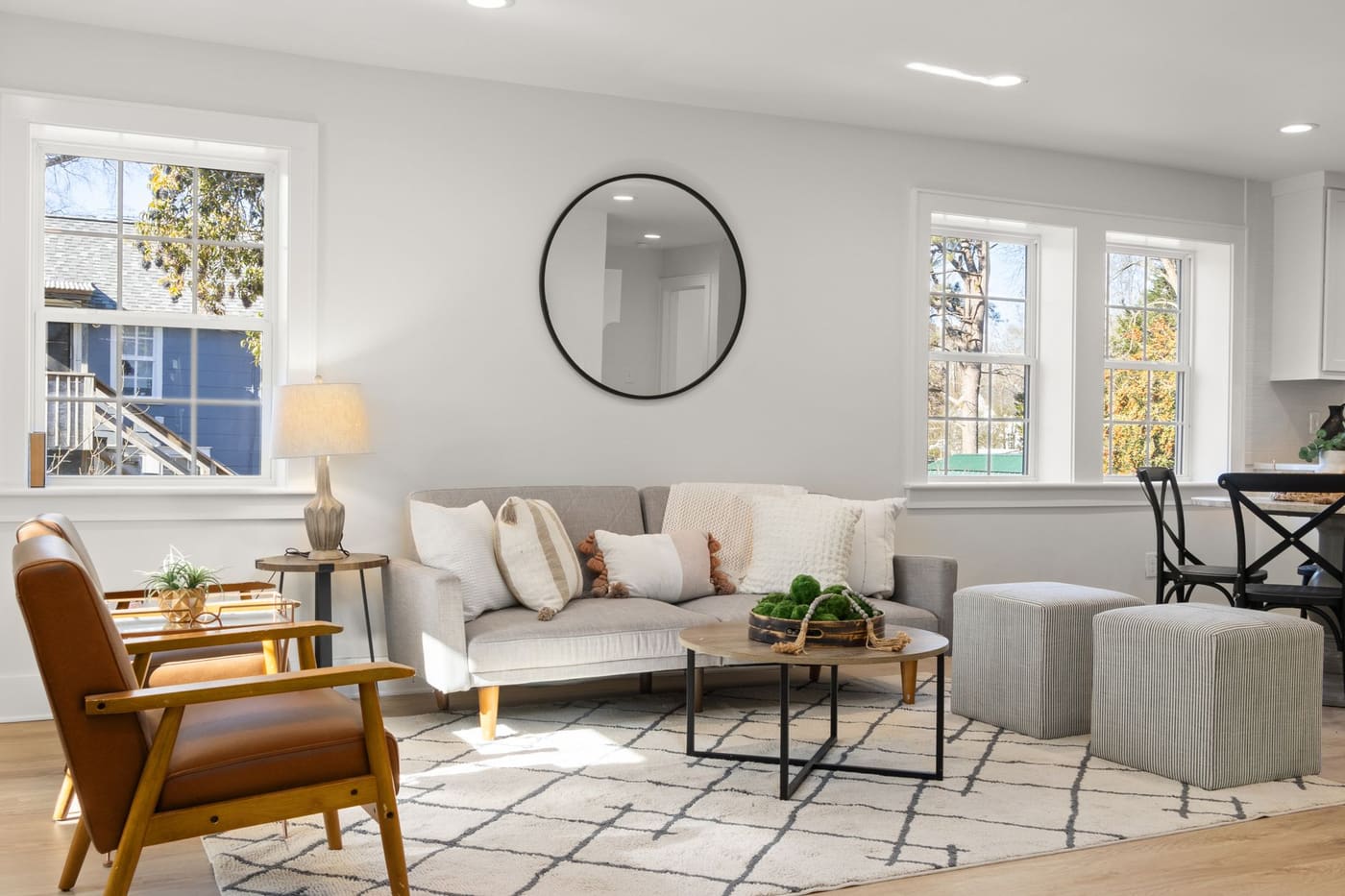
A small room feels bigger when you clear the floor, keep the walls and furniture light in color and visual weight, and spread light evenly so there are no dark corners. You can do most of this without renovating: fewer and smaller pieces, furniture on legs, mirrors placed to bounce light, and curtains hung high. Each change makes the room read as more open even though the square footage stays the same.
Square footage is only part of why a room feels cramped. Blocked walkways, bulky furniture, strong contrast, and too many small objects all shrink the perceived space. The sections below take each factor in order and give you measurements and costs so you can decide what is worth doing.
Clear the floor and the sight lines
The eye judges room size by how much floor and wall it can see. Furniture that touches the floor with a solid base, such as a skirted sofa or a chunky dresser, hides floor area and makes the room feel smaller. Pieces with visible legs, 6 inches or more of space underneath, show floor and make the space feel lighter.
Practical steps:
- Choose sofas, chairs, and beds with exposed legs, and consider shorter, slimmer arms.
- Use a bed frame with 8 to 12 inches of clearance under it, or use that space for flat storage boxes.
- Pull pieces off the walls by a few inches if you have room, since a thin gap shows more wall and floor behind the furniture.
- Keep the path from the door to the window clear. A straight line of sight to a window makes a room feel deeper.
Do not push every item into the corners as a reflex. A small room usually benefits from one clear path, and the room layout guide shows how to place pieces so walkways stay 30 to 36 inches wide where possible.
Fit furniture to the room, not the other way around
The most common reason a small room feels tight is furniture that is too big. A standard 84-inch sofa, a pair of armchairs, and a large coffee table can take most of a 10 by 12 foot living room.
Use these checks:
- Measure the room and mark furniture on the floor with painter’s tape.
- Compare a smaller option, such as a 72-inch sofa or a loveseat, which is often 55 to 65 inches long.
- Swap a bulky coffee table for a round or oval one, since curved edges are easier to pass and take less visual space. Nesting tables can also work.
- Choose one large piece and a few small ones. Several medium pieces tend to look cluttered.
Armless chairs, backless benches, and ottomans can be moved or tucked away when you need space. Furniture that does two jobs helps too: a storage ottoman, a bed with drawers, or a console that doubles as a desk. The article on choosing furniture that fits a room lists typical dimensions and clearances to check before buying.
Use color and contrast with restraint
Light, cool, or soft colors tend to make walls feel like they recede, which helps in a small room. White, pale gray, soft beige, pale blue, and light greige are common choices. Painting walls, trim, and ceiling in similar tones reduces the edges the eye catches and can make the room feel more continuous.
This does not mean everything must be white. Dark colors can work in a small room if you embrace them, since a deep color on all surfaces can blur corners and make the room feel cozy. The problem is mixed contrast: a white wall, a black sofa, and a bright rug each break the room into separate blocks.
A simple approach:
- Keep large surfaces (walls, sofa, rug) within a close range of lightness.
- Use one or two accent colors in pillows, art, or a single chair.
- Use a glossy or satin finish on trim or a single wall if you want light bounce, though shiny paint highlights wall flaws, so prep carefully.
Paint is one of the cheapest changes, and a gallon commonly covers roughly 350 to 400 square feet, so check the can for coverage. EPA guidance says paint in homes built before 1978 may contain lead, so test before sanding or scraping, avoid dry sanding, and use a lead-safe certified contractor for work that disturbs it.
Fix the lighting so no corner goes dark
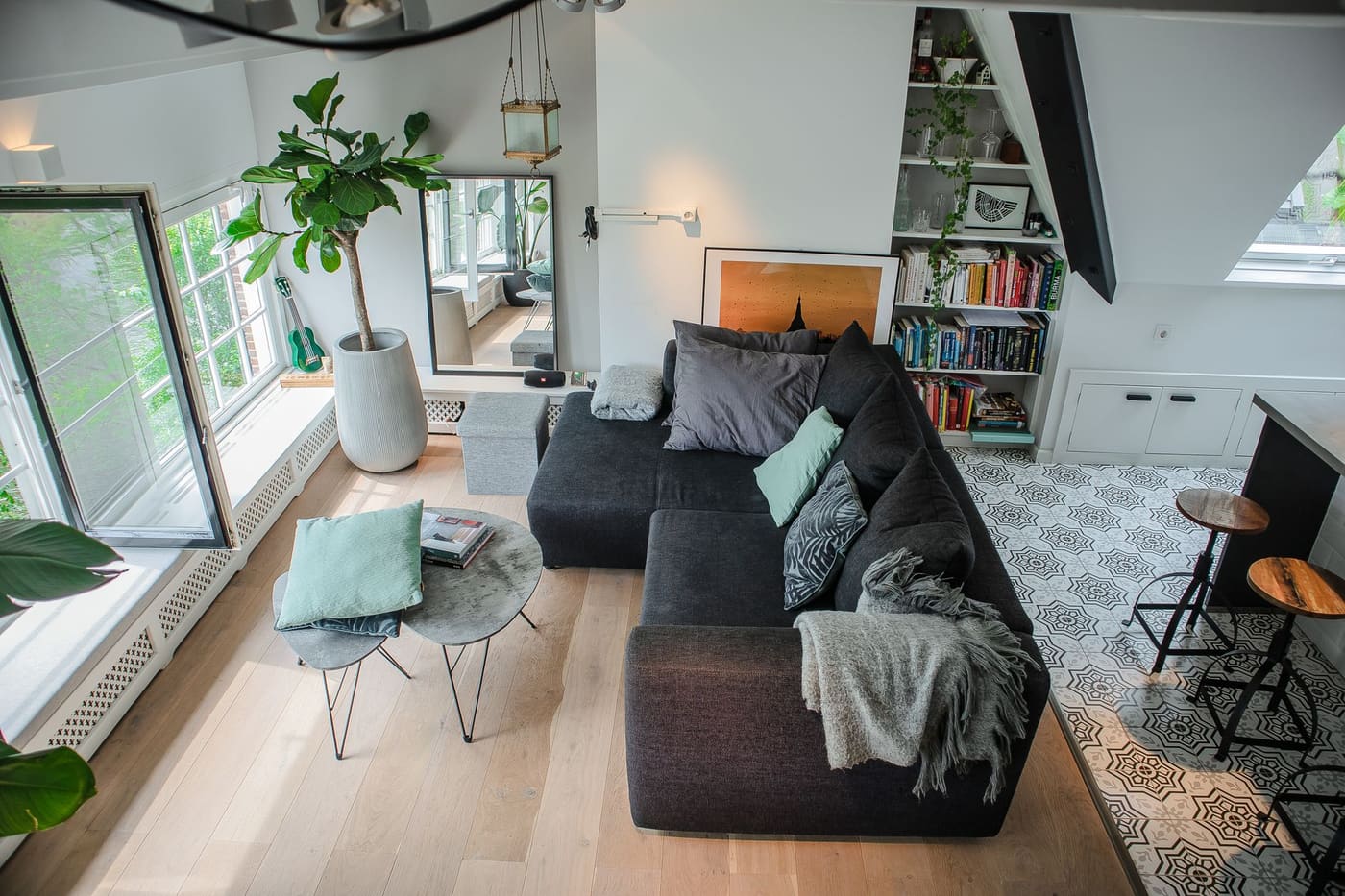
Dark corners make walls feel closer. Spread light around the room’s edges, not only in the center. A single overhead fixture leaves shadows, so add lamps at different heights in at least two or three places.
Good options:
- A floor lamp in a corner that points up or is shaded to glow softly
- A table lamp on a shelf or console
- Wall sconces, including plug-in versions, which save floor and table space
- Bulbs rated about 2700K to 3000K for warm rooms or up to 3500K for a crisper feel
Brightness matters too. A common rule of thumb is 10 to 20 lumens per square foot in living spaces, so a 120 square foot room often lands around 1,200 to 2,400 lumens spread across several sources, and darker rooms need more. If your room still seems gloomy after adding lamps, the guide on why a room feels dark even with lights on covers bulb color, shade direction, and dark surfaces. Windows matter most of all. Keep them clear of heavy furniture, and use light-filtering shades or sheer curtains instead of dark, thick drapes.
Do not change fixed wiring yourself. Hardwired sconces and new ceiling fixtures involve live electrical work, so hire a licensed electrician, and use plug-in options if you rent.
Use mirrors, glass, and reflective surfaces
A mirror placed across from a window bounces daylight and makes the room feel deeper. A mirror that reflects a blank wall does much less, so place it where it picks up light or an attractive view. Large mirrors, such as a leaning floor mirror about 24 by 70 inches or a wide mirror above a console, have the biggest effect.
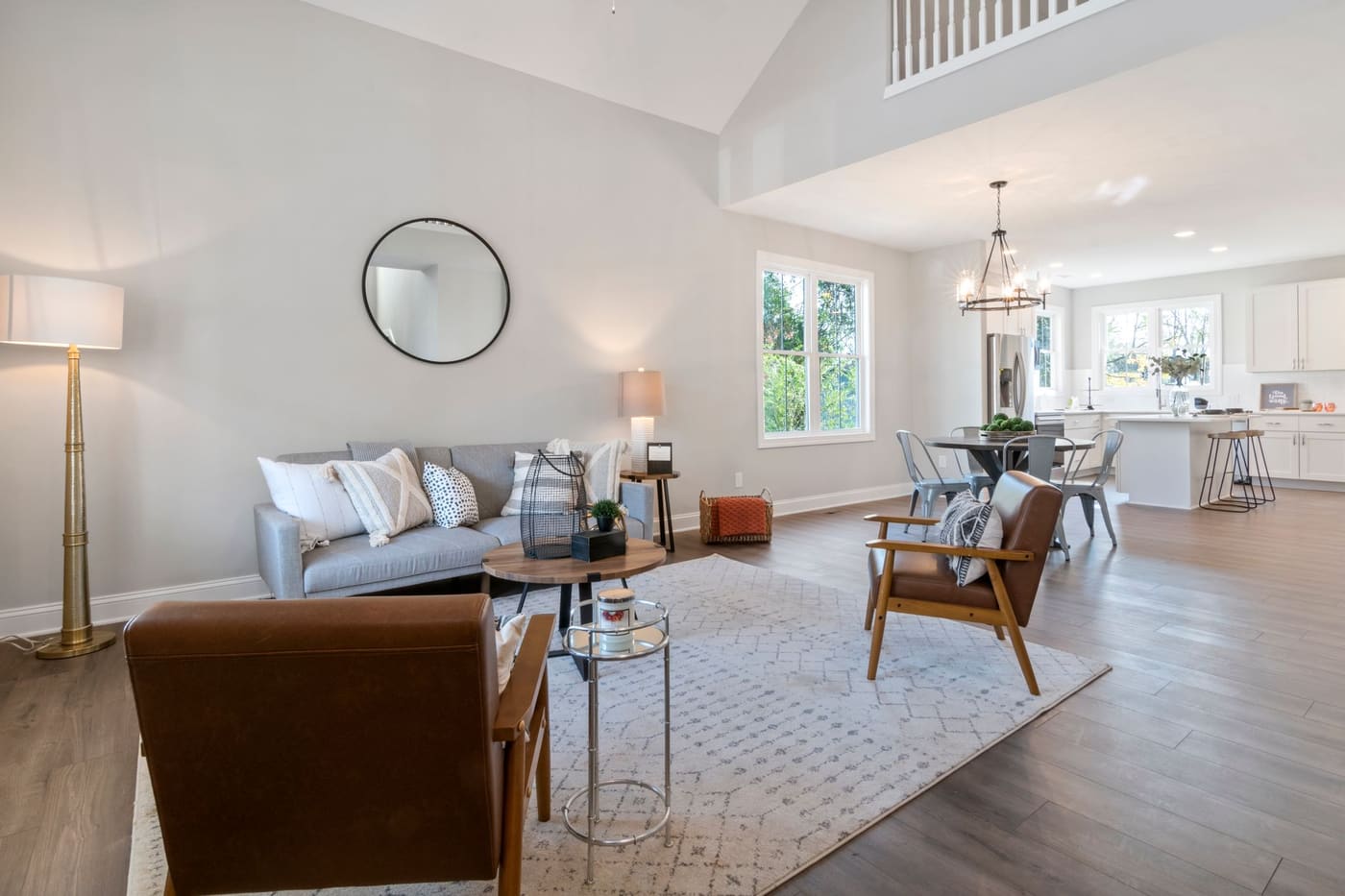
Other reflective materials help in small amounts: glass or acrylic tables, metal frames, and glossy ceramics. Too many shiny surfaces can feel cold or busy, so use them as accents. Hang mirrors with proper hardware rated for their weight, and mount heavy ones into studs.
Draw the eye upward
Tall elements make ceilings feel higher, which makes a room feel larger.
- Curtains: Hang the rod near the ceiling or about 4 to 6 inches above the window frame, and extend it a few inches past each side so the glass is fully exposed when open. Let panels reach the floor.
- Shelving: Use tall, narrow bookcases instead of wide, low ones, and anchor tall pieces to the wall to prevent tipping, which is especially important with children or pets.
- Art: Hang pieces with the center near 57 to 60 inches from the floor, or use a tall vertical piece to stretch the wall.
- Stripes and vertical lines: Subtle vertical patterns can add height, but keep them tonal.
Taller furniture should not crowd the room. One tall element per wall is a good limit.
Reduce visual clutter
Small rooms cannot hide clutter. Many small objects across every surface make a room feel smaller, even when each item is fine on its own. Edit what you display, give daily items a closed home, and keep a few surfaces fully clear.
A quick edit:
- Remove half the items on shelves and tables, then add back only those you like most.
- Use baskets with lids, storage boxes, and under-bed bins.
- Use wall hooks, floating shelves, or a slim wall-mounted desk to move items off the floor.
- Hide cords with cord covers or clips.
The advice on finishing a room without making it look cluttered covers grouping and editing in more detail.
To size curtains and hang them high, use the curtain size calculator.
Where this comes from
The sizes, clearances and ratios here are common interior-design rules of thumb published by design and furniture publications, not building codes, and they are guidelines to adjust to your room. The lead-paint point follows U.S. EPA guidance on lead-safe renovation, and the lumen figures follow general lighting-efficiency guidance on lumens and color temperature. Prices, product specifications and local rules change, so check current figures with the seller, manufacturer or local authority before you buy or start work. It is based on common small-space decorating guidance.