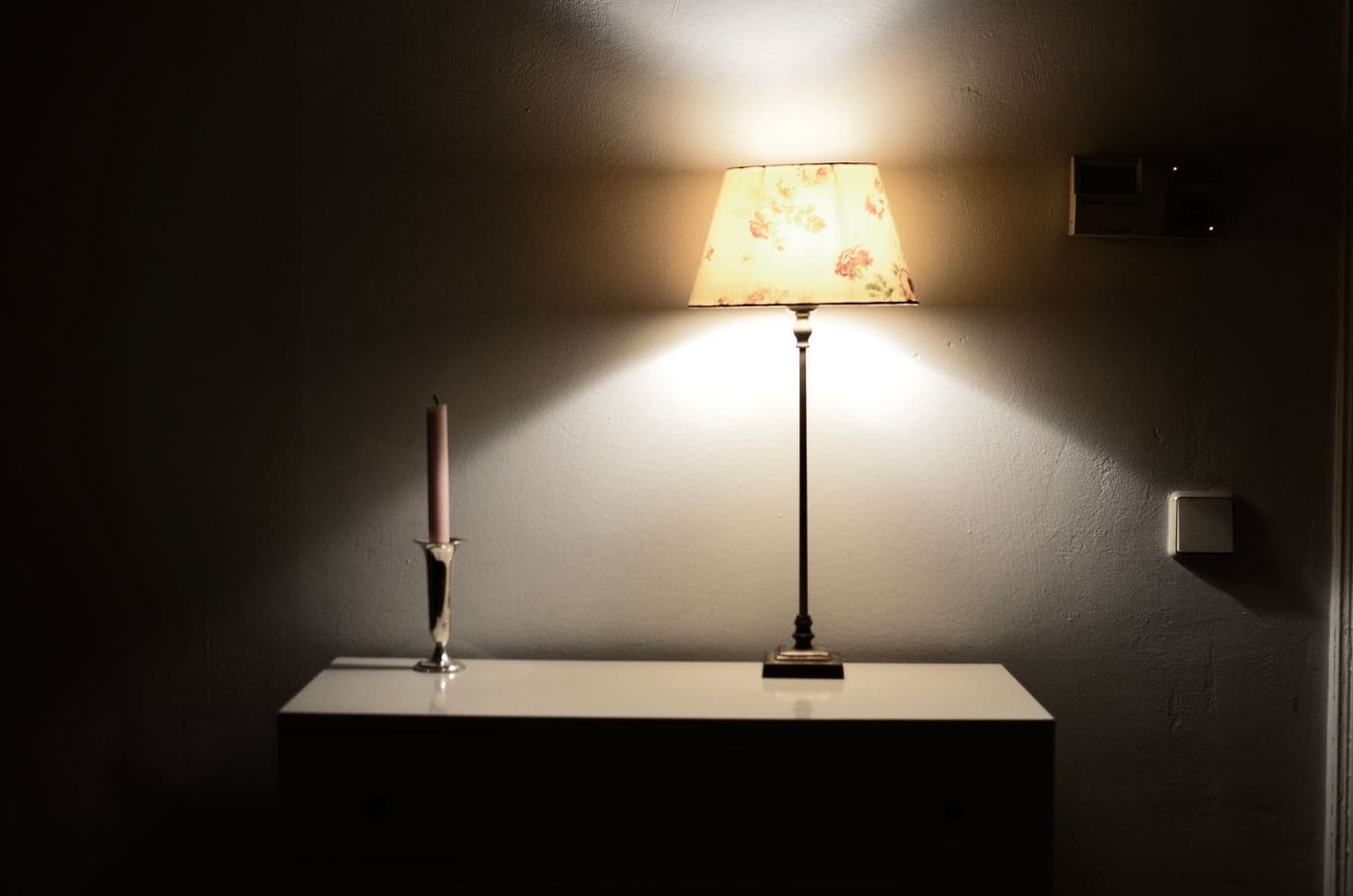
A room feels dark with the lights on mostly because of five things: the light is too yellow, dim, or all from one overhead source; it lands on dark surfaces that absorb it; shades point it the wrong way; the bulbs are low in lumens for the room size; or daylight is blocked. Fix those in order and a room with the same number of fixtures can feel clearly brighter.
Adding more bulbs is not the answer if the real problem is placement or surface color. This guide walks through each cause with numbers you can check, and the cheap fixes that work before you spend on new fixtures or call an electrician.
Check the lumens first
Brightness is measured in lumens, not watts. Many rooms feel dim simply because the total light output is too low for the space. As a rough guide, living areas often feel good at about 10 to 20 lumens per square foot, kitchens and workspaces need more, and dark rooms need more than bright ones.
A quick rule of thumb: multiply the room’s area in square feet by 15. A 12 by 14 foot room is 168 square feet, so you would aim for around 2,500 lumens in total. A standard bulb that replaces a 60-watt incandescent gives about 800 lumens, so this room might need three to four such bulbs spread across the room.
Check the packaging on your current bulbs. Many decorative or “soft” bulbs, such as 40-watt-equivalent candle bulbs, give only about 450 lumens or less. A fixture with three of them yields roughly 1,000 lumens, which is not much for a room of any size. Swapping for higher-lumen bulbs is the simplest fix, as long as you stay within the fixture’s maximum wattage rating, which is printed on the socket or label. Using higher-wattage bulbs than rated is a fire risk, though LEDs use far less power for the same output, so there is usually plenty of margin.
Look at color temperature
Bulb color changes how bright a room feels. Very warm bulbs, around 2200K to 2400K, look cozy but dim. Cool or daylight bulbs, around 5000K, look bright and clinical. Most living spaces feel best around 2700K to 3000K.
Common errors:
- Too warm and too low: A room with only 2200K to 2400K bulbs can feel murky at night.
- Too cool: 5000K bulbs may look bright but feel harsh and flat.
- Mixed temperatures: Different bulbs in one room make patches look dingy and uneven.
Try 3000K bulbs in a gloomy room, and use the same color temperature in every fixture. Check the CRI too. A CRI of 90 or more makes colors look richer, which makes a room feel more alive. Cheap bulbs with a low CRI can make everything look washed out.
Add light at more than one height
A single overhead light casts shadows in corners and on faces, and the center may be bright while the edges stay dim. The eye reads a room’s brightness partly by its walls and corners, so a room with dark corners feels dark even if the center is well lit.
Add layers:
- Ambient: a ceiling fixture or large floor lamps that bounce light off the ceiling
- Task: reading lamps, desk lamps, under-cabinet lights
- Accent: a small light on art, shelves, or plants
A basic fix is to add two or three lamps at different heights, such as a floor lamp in a corner, a table lamp on a sideboard, and a lamp near seating. Place them so that they form pools of light that overlap. The broader guide on what lighting makes a room feel better and more usable explains how to plan layers for each room.
Check shade direction and lamp type
The lamp shade controls where the light goes. A dark, thick, or opaque shade absorbs most of the light and sends it only up and down, leaving the walls dark. A light, translucent shade, such as white linen or paper, spreads more light.
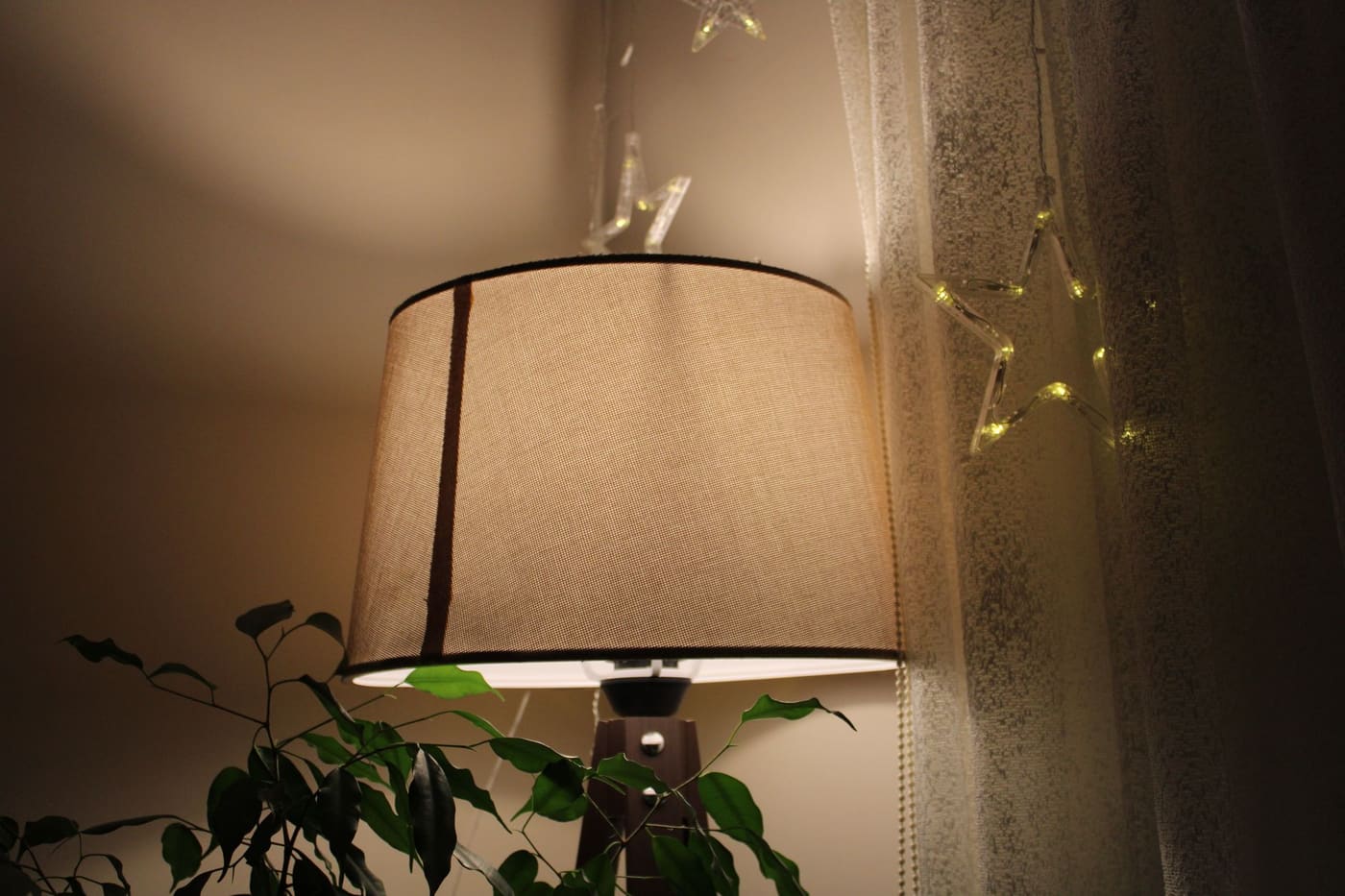
Things to check:
- Shade color: A white or cream shade lets much more light through than a dark or patterned one.
- Shade size: The shade should be wide enough to cover the bulb, with the bottom of the shade at about eye level when you are seated.
- Direction: Downlights make pools on the floor and table. Uplights bounce off the ceiling and brighten the whole room. Use both.
- Visible bulb: Place the bulb inside the shade so you do not see glare, but do not cover it so much that light is trapped.
Directional recessed lights can create scalloped patterns and dark gaps on walls. Changing the fixtures or adding wall-washing lights is a job for a licensed electrician, who can also check that fixtures are rated for insulation contact.
Notice what the light hits
Dark walls, floors, ceilings, and furniture absorb light. A room painted deep navy, charcoal or dark brown needs noticeably more light than a white room to feel equally bright. Surface finish matters too: matte paint absorbs more light than satin, and glossy surfaces reflect it.
Light reflectance value (LRV) is a number printed on many paint chips, from 0 for black to 100 for white. Higher numbers reflect more light. Many designers treat chips above roughly 60 as light and below about 30 as dark. In a dim room, consider:
- Painting the ceiling a bright white, which has high LRV
- Using a light color on walls, or at least on the wall opposite the window
- Choosing a lighter rug, since a dark rug can swallow light
- Adding mirrors and glossy accents to bounce light
EPA guidance says paint in homes built before 1978 may contain lead, so test before sanding or scraping, avoid dry sanding, and use a lead-safe certified contractor for work that disturbs it. The guide to using color and materials so a room feels cohesive shows how to choose light, balanced colors without making the room look flat.
Open up daylight
Natural light is the strongest source in most rooms, and blocked windows are an easy fix. Heavy drapes, big furniture in front of windows, shrubs outside, and dark window frames all cut daylight.
- Hang curtain rods wider than the frame, so panels sit beside the window and the glass is clear when open.
- Use sheer or light-filtering shades instead of heavy ones in daytime rooms.
- Move tall furniture away from windows.
- Clean windows inside and out, which can make a visible difference.
- Trim exterior plants that block light, using a ladder safely or hiring a professional for high branches or near power lines.
Place a mirror across from a window to bounce light deeper into the room. For small rooms, see the guide on making a small room feel bigger, which covers mirrors, color, and layout together.
Common causes at a glance
| Symptom | Likely cause | Fix |
|---|---|---|
| Whole room feels dim | Too few lumens | Higher-lumen bulbs, more lamps |
| Room feels yellow or murky | Bulbs too warm or low CRI | 2700K to 3000K, CRI 90 or higher |
| Corners are dark | One central light | Add floor and table lamps |
| Light pools on the floor only | Downward shades | Add uplights or lighter shades |
| Bright but still gloomy | Dark walls and floor | Lighter paint, rug, mirrors |
| Daytime is dark | Blocked windows | Open curtains, clear obstructions |
Stay within fixture ratings
Never exceed a fixture’s wattage rating, and do not use bulbs unrated for enclosed fixtures. Hardwired changes, such as new ceiling lights, circuits and dimmer switches, are electrical work for a licensed professional, and local codes often require permits. Use plug-in lamps and wall sconces if you rent.
To check your total lumens against the room size, try the room lighting calculator.
Where this comes from
Lumens, the 800-lumen equivalent to a 60-watt bulb, color temperature and color rendering follow general lighting-efficiency guidance, and the per-square-foot figure is a common rule of thumb rather than a standard. Light reflectance value is the 0 to 100 scale printed on many paint chips. The lead-paint point follows U.S. EPA lead-safe renovation guidance. Prices, product specifications and local rules change, so check current figures with the seller, manufacturer or local authority before you buy or start work.