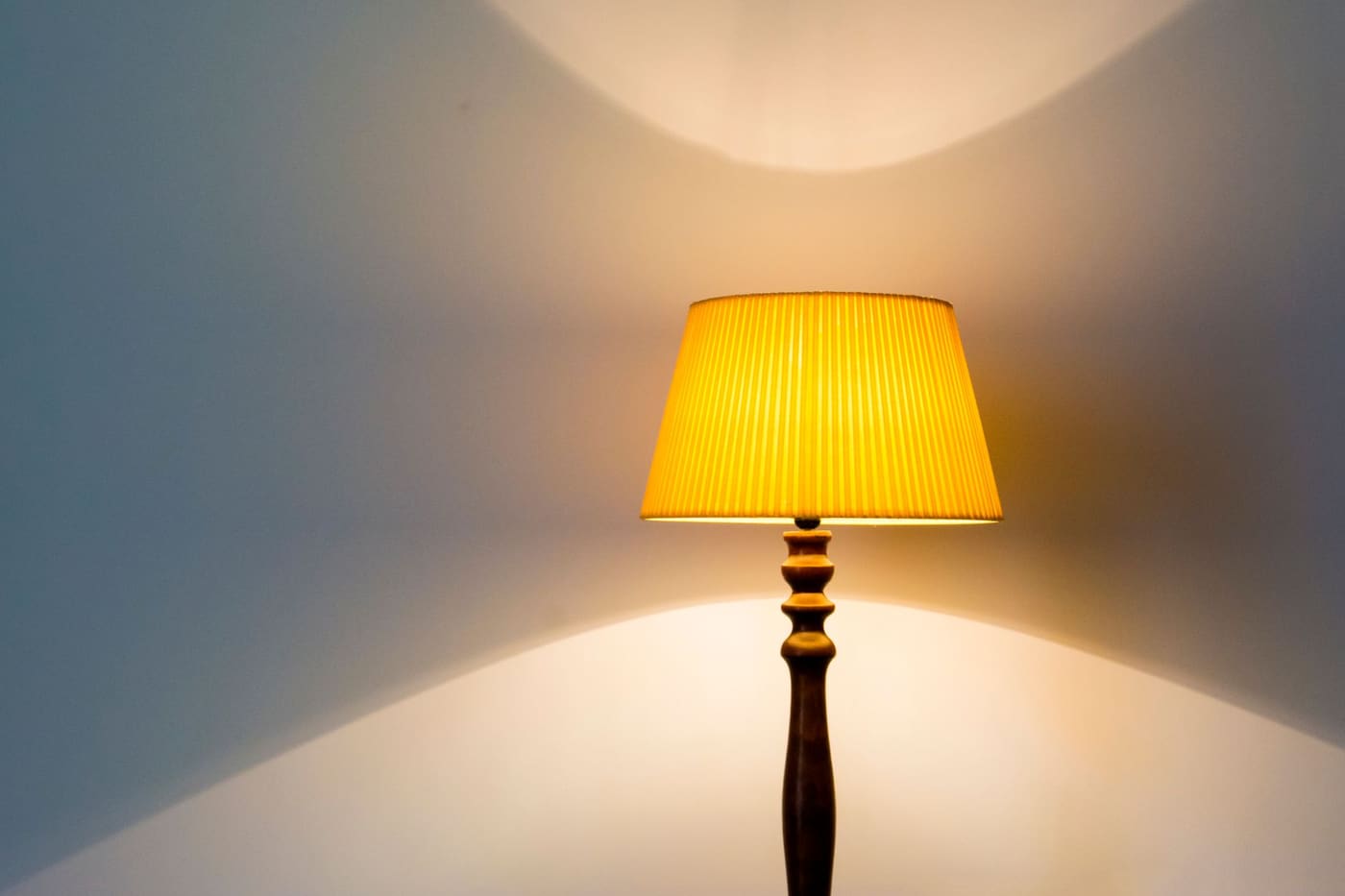
The lighting that makes a room feel better is layered: general (ambient) light for overall brightness, task light where you read or work, and accent light to add depth. Use warm bulbs, around 2700K, in living spaces, put lamps at several heights, and put the main light on a dimmer. One ceiling fixture on its own almost always makes a room feel flat and harsh.
Lighting changes how a room feels faster than paint or furniture, and it is one of the cheapest fixes. Plug-in lamps and new bulbs cost little and need no electrician. The sections below explain the three layers, how to choose bulbs, how to place fixtures, and how much light each room needs.
Use three layers, not one
Lighting designers think in layers, and you can apply the same idea in any room.
- Ambient light fills the room evenly. It comes from ceiling fixtures, recessed lights, large floor lamps that bounce light off the ceiling, or wall sconces.
- Task light is focused for an activity: a reading lamp beside a chair, under-cabinet lights over kitchen counters, a desk lamp, or a bathroom vanity light.
- Accent light highlights features such as art, a bookshelf, a textured wall, or plants. Small spotlights, picture lights, and LED strips are common sources.
A well-lit living room might have a ceiling fixture on a dimmer, two table lamps, a floor lamp by the sofa, and one small accent light on a shelf. A kitchen might have ceiling lights, under-cabinet strips, and a pendant over the island. A bedroom might have a soft overhead, two bedside lamps, and a dim light near the closet.
The goal is that the room does not depend on any one switch. When you can change which layers are on, you change the mood, and the room works for cooking, reading, or relaxing.
Choose the right bulb color and quality
Bulb color temperature is measured in Kelvin (K). Lower numbers are warmer and yellower, and higher numbers are cooler and bluer.
| Kelvin | Look | Good for |
|---|---|---|
| 2200K to 2700K | Warm, candle-like to soft white | Living rooms, bedrooms, dining |
| 3000K | Warm white | Kitchens, bathrooms, entries |
| 3500K to 4000K | Neutral white | Home offices, garages, laundry |
| 5000K and above | Daylight, bluish | Workshops, task areas, rarely living spaces |
Most people find 2700K to 3000K comfortable at home. Using the same color temperature throughout a room prevents patchy, mismatched light. Mixing 2700K and 5000K bulbs in the same space looks off.
Check the color rendering index (CRI), which says how accurately a bulb shows colors. Efficiency programs commonly set a minimum of 80, and a CRI of 90 or higher makes skin, wood, food and fabrics look more natural.
Brightness is measured in lumens, not watts. For reference, a bulb that replaces an old 60-watt incandescent is about 800 lumens. A common rule of thumb is around 10 to 20 lumens per square foot for living areas, more for kitchens and workspaces, though preferences and room darkness vary. A 12 by 15 foot living room, about 180 square feet, often wants about 1,800 to 3,600 lumens spread across several sources.
Place lamps at different heights
Light at one height flattens a room. Spreading sources across the room creates pools of light that give depth and keep corners from going dark.
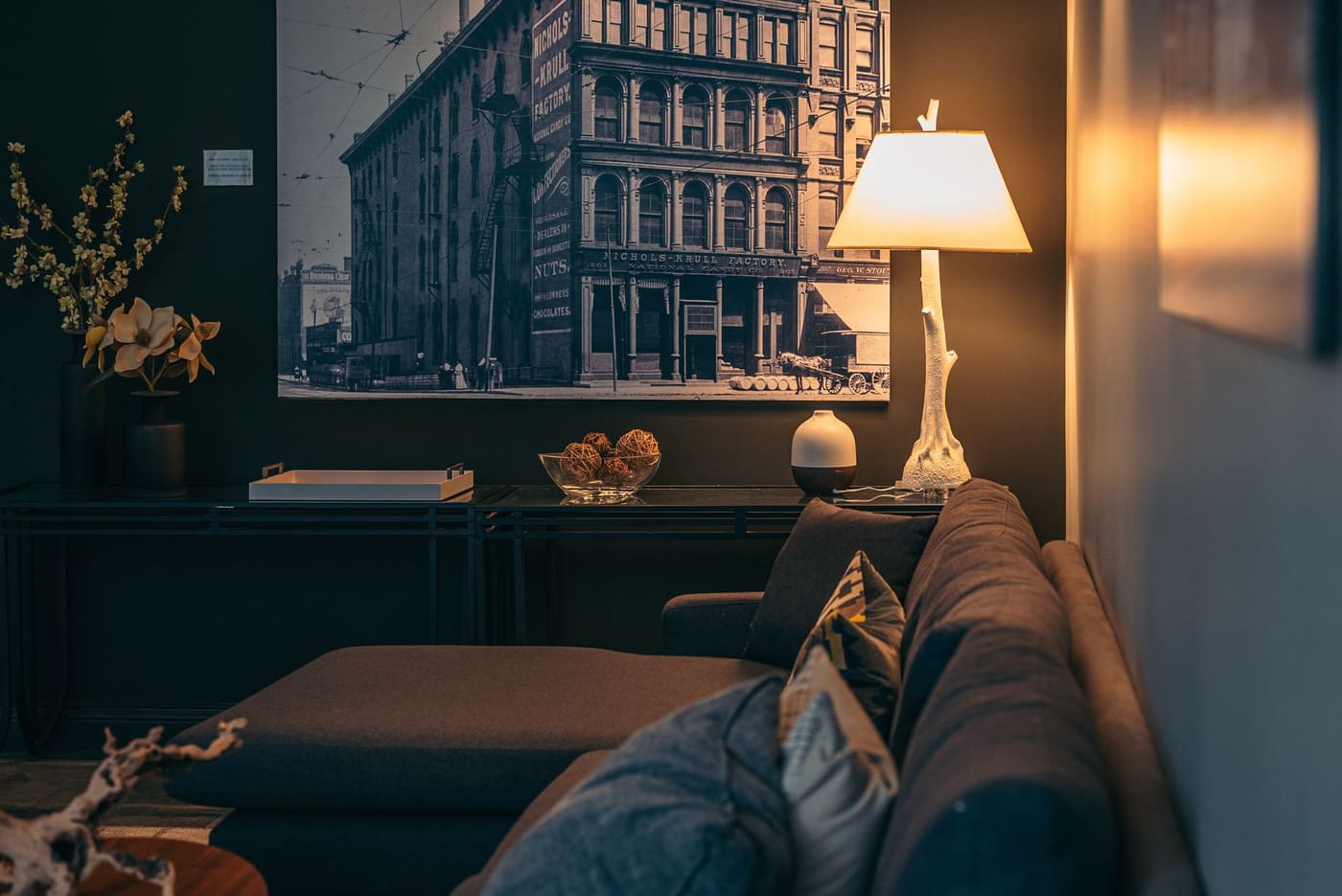
- Floor lamps work as general or reading lights, with the lamp head about 40 to 49 inches above the floor for seated reading, or taller for upward ambient light.
- Table lamps should have the bottom of the shade near eye level when you are seated, about 38 to 42 inches from the floor, so the bulb is not in view.
- Wall sconces are placed about 60 to 66 inches from the floor in most rooms, and plug-in versions need no wiring.
- Pendants over a dining table hang about 30 to 36 inches above the table, and over a kitchen island similarly.
- Bedside lamps should light a book without shining into a partner’s eyes, so use adjustable arms or shaded lamps.
Aim for at least three light sources in a living room and two in a bedroom, set in different parts of the room, ideally forming a triangle around seating. If a room still feels dark despite several lights, the cause is usually placement or surface color, which the article on why a room feels dark even with lights on explains.
Add dimmers and controls
A dimmer lets you adjust the same light for different uses: bright for cleaning, low for dinner or movie night. Make sure the bulb is dimmable and the dimmer type matches, since a mismatch can cause flicker or buzzing, and use the dimmer’s rated load limit.
Easy options:
- Plug-in dimmers that sit between a lamp and the outlet
- Smart bulbs that dim and change color temperature through an app
- Smart plugs to put lamps on a timer so you come home to a lit room
Replacing a wall switch with a dimmer, or wiring any new fixture, is electrical work. Unless you are trained, hire a licensed electrician for this work. Many areas require permits for new circuits and fixtures, and you should never work on live wiring or exceed a fixture’s maximum wattage.
Match the lighting to the room’s job
Each room has different needs.
- Living room: Ambient light from lamps and a dimmed overhead, task light by reading chairs, and an accent light on art or shelves.
- Kitchen: Bright, even ambient light, with task light under cabinets for counters. Aim for 3000K to 4000K here for clear color and visibility.
- Dining room: A centered pendant on a dimmer, plus sideboard lamps or sconces for softness.
- Bedroom: Warm, low light. Use lamps and a dimmed overhead, with no harsh light directly overhead at night.
- Bathroom: Light on both sides of the mirror or above it, at about 3000K, to avoid shadows on the face.
- Home office: A desk lamp at 3500K to 4000K, and a screen position that avoids glare from windows.
- Entry and hallways: Soft, even light, plus a lamp or sconce on a console if there is one.
Many bathrooms and kitchens have rules about moisture-rated fixtures, so check the rating label, and use fixtures rated for damp or wet locations when they could be splashed.
Work with daylight and room surfaces
Natural light is the best source in a room, so keep windows clear and use light-filtering curtains or sheer shades, hung high and wide so the glass is exposed. Surfaces matter too. Light walls, ceilings, and floors bounce more light, which makes a room feel brighter, while dark walls absorb it. A matte white ceiling reflects much more light than a dark carpet, which absorbs a lot of it.
If you are choosing colors, consider how they affect light, and see the guide on using color and materials so a room feels cohesive. Mirrors across from windows bounce daylight deeper into the room.
Light an open or multi-use room
Open rooms benefit from separate lights per zone, so each area has its own feel. A pendant over the dining table, lamps for the sofa, and a task light at the desk each tell you where one activity ends and another begins. The article on zoning an open-plan room covers how lights, rugs, and furniture work together.
Fix common lighting mistakes
The usual culprits are a lone ceiling light (add at least two lamps), bulbs that are too cool or too bright (move to 2700K to 3000K), visible bare bulbs (use shades or frosted glass), shadows on work surfaces (place the task light so your hand does not block it), dark corners (add a floor lamp or uplight) and mixed bulb colors in one room.
Check cords, too. The U.S. Consumer Product Safety Commission advises against running extension cords under rugs or through doorways, and overloaded outlets and power strips are a fire risk. Use bulbs that match the fixture’s wattage rating, and bulbs rated for enclosed fixtures where heat can build up.
To estimate how much light your room needs, use the room lighting calculator.
Where this comes from
Lumens, color temperature, color rendering and the 800-lumen equivalent to a 60-watt bulb follow general lighting-efficiency guidance. Cord safety follows the U.S. Consumer Product Safety Commission’s extension cord guidance. Lamp heights and per-room color temperatures are common design rules of thumb. Prices, product specifications and local rules change, so check current figures with the seller, manufacturer or local authority before you buy or start work.